Droplets on Bent Fibers
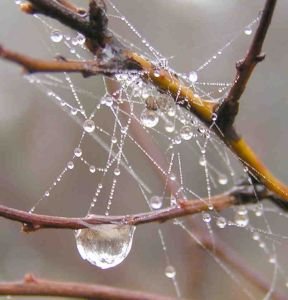
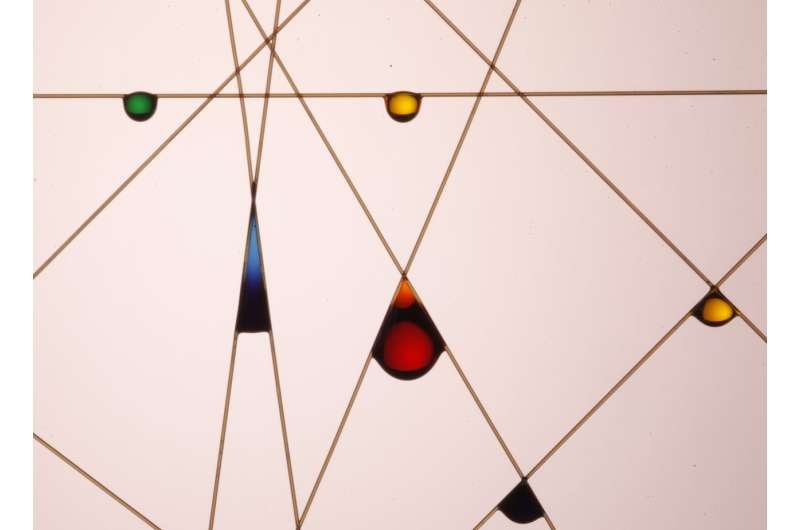
Bent fibers can retain larger droplets than simple horizontal fibers, supporting the role of geometry in droplet suspension.
Soft Matter · 2018 · Vol. 14 · p. 3724
DOI: 10.1039/C7SM01729D
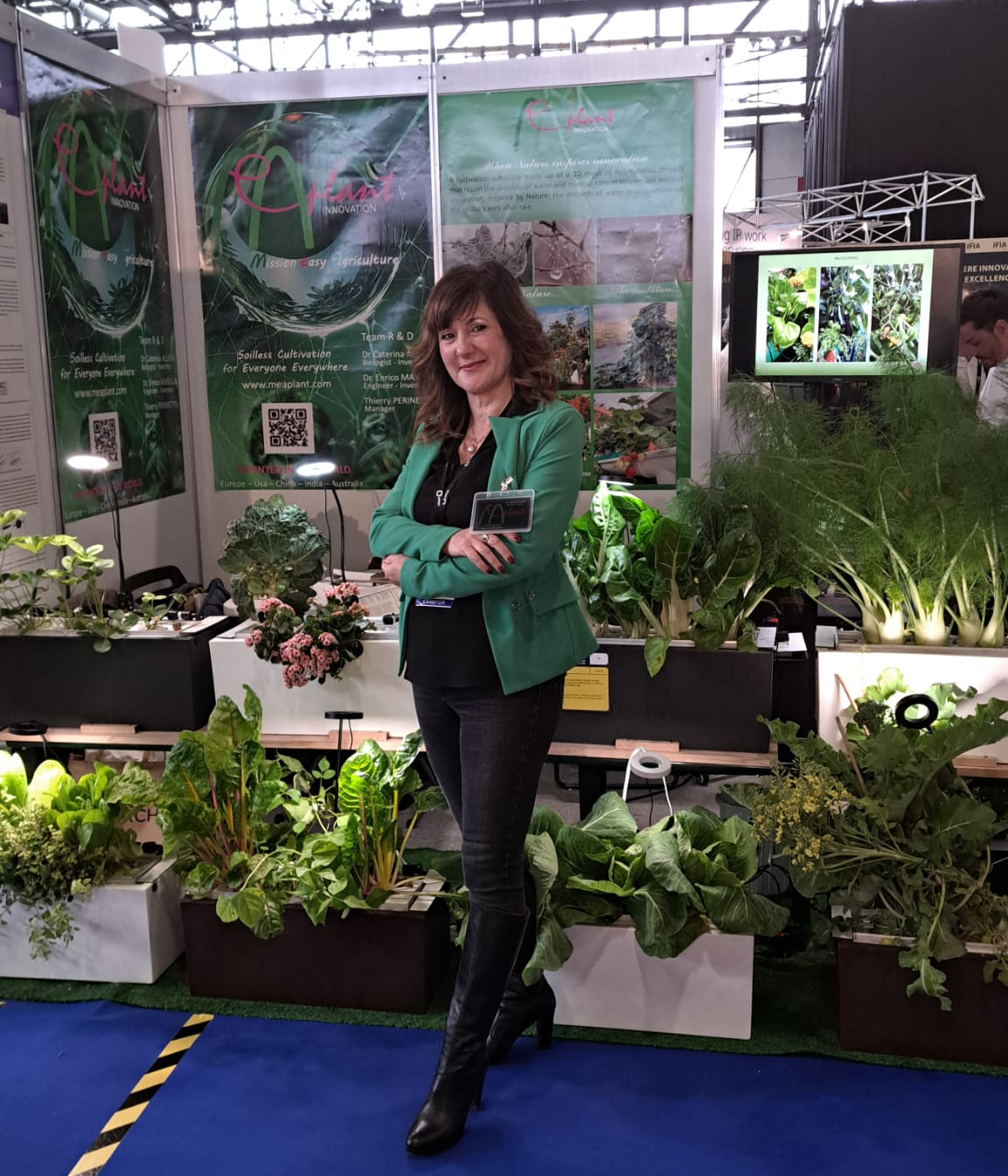
Dr. Caterina Allera, in her experience as a researcher in the field of soilless cultivation at CREA (Italian Council for Agricultural Research), explored various cultivation techniques using both natural and artificial substrates, which are of great interest due to their higher productivity compared to traditional farming methods.
Her research led her to conclude that the complexity of these cultivation systems primarily arises from the interaction between the growing substrate and the nutrient solution supplied to the plants.
Currently used substrates retain water and mineral salts, which accumulate within the porous matrix. High salt concentrations at the root level are harmful to plants, making complex monitoring systems necessary to prevent crop damage.
These challenges inspired the development of Meaplant Innovation — a breakthrough concept based on a cultivation substrate capable of retaining nutrient solution droplets without absorbing them.
But how can a substrate retain water without absorbing it?
The answer came directly from nature itself: the way water droplets remain suspended on a spider’s web after rainfall became the inspiration behind Meaplant Innovation’s revolutionary new substrate.
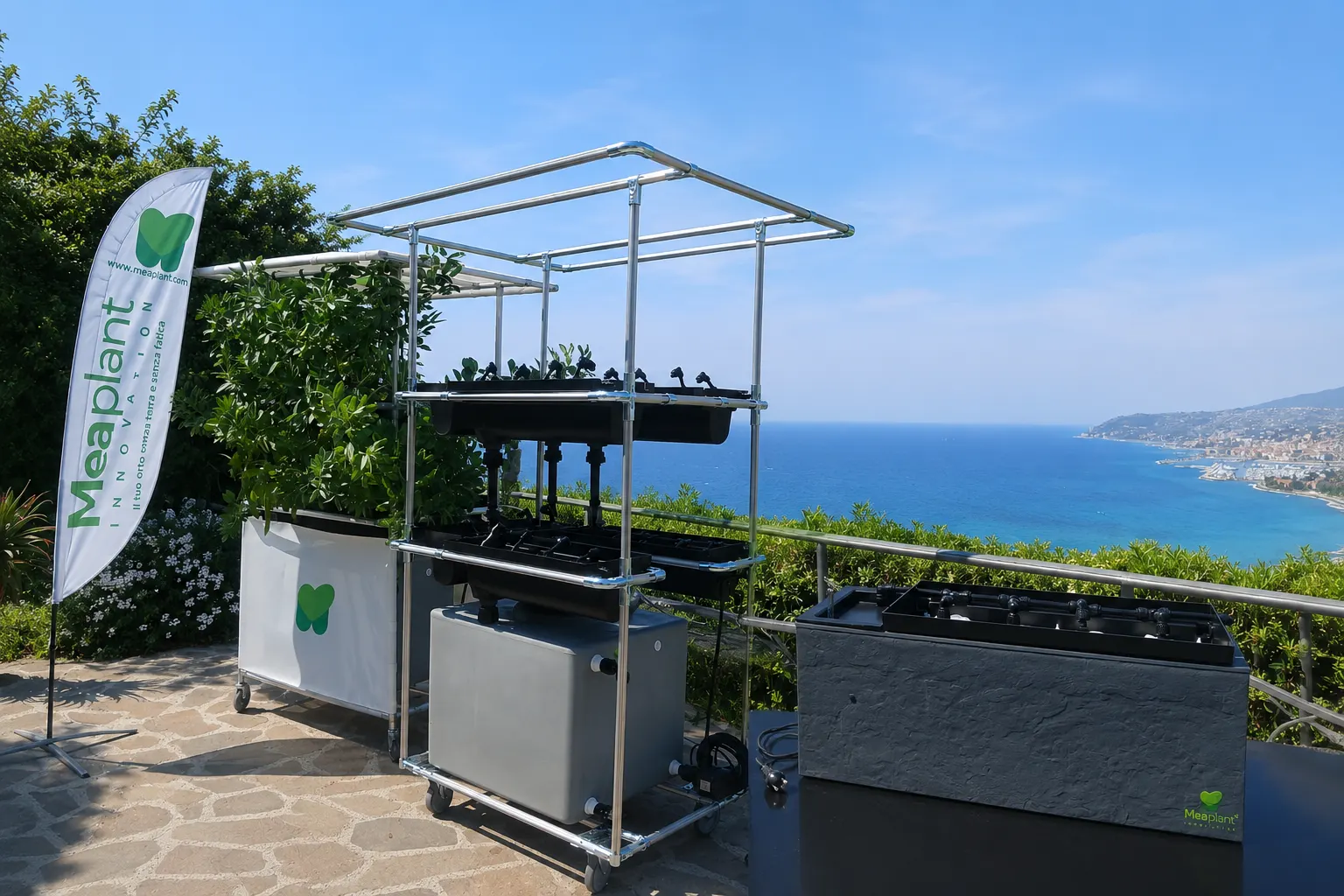
Meaplant Innovation combines advanced soilless cultivation technology with practical everyday use, making cultivation simpler, cleaner and more accessible everywhere.
A patented soilless cultivation system based on an innovative hydrophobic and inert substrate, designed to retain water through surface tension while supporting strong plant growth.
Meaplant Innovation is based on physical mechanisms observed in nature and studied in droplet dynamics, microfluidics, fiber networks and water-retention systems.
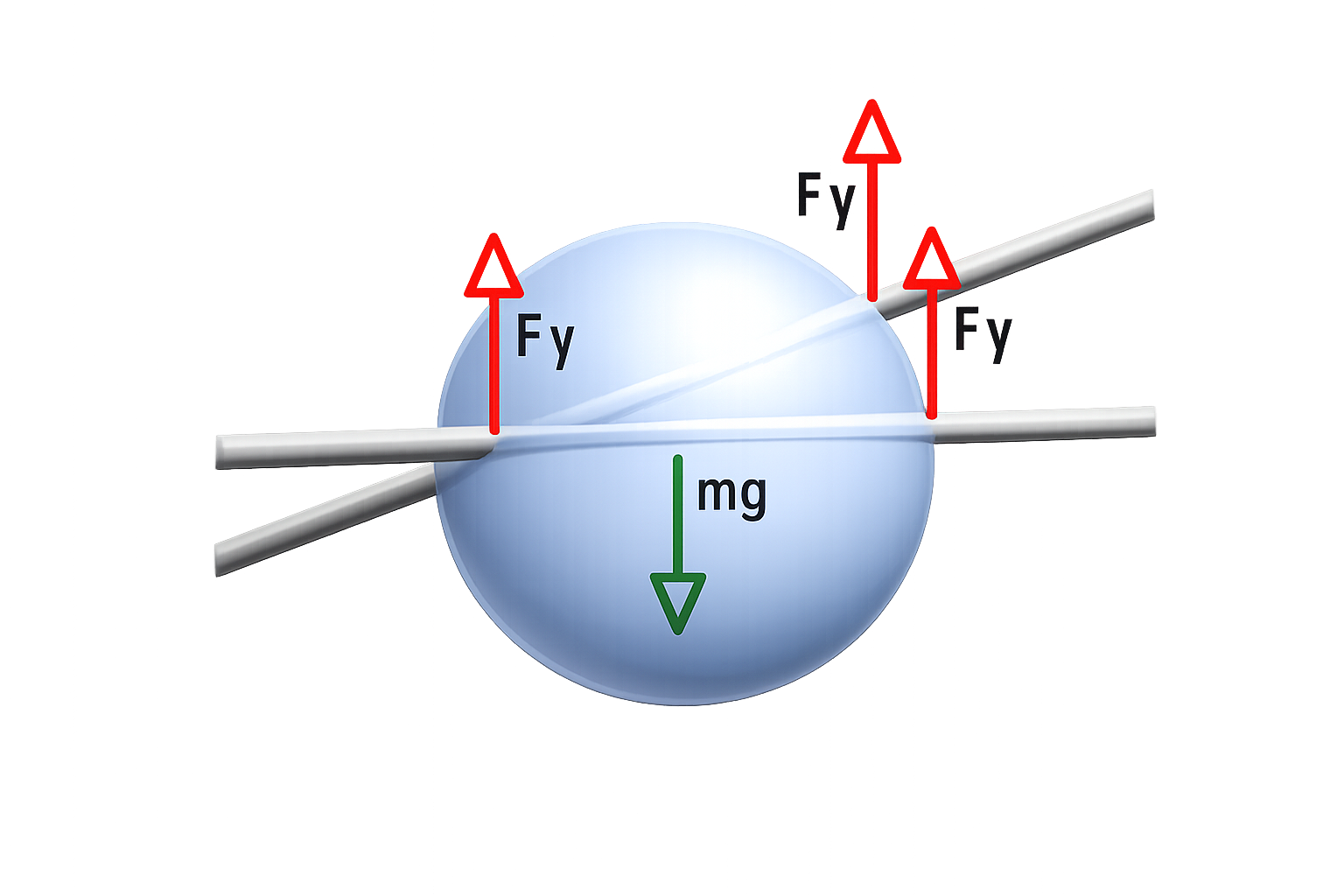
Just as droplets can remain suspended on spider webs, natural fibers or hydrophobic surfaces, the Meaplant substrate uses a network of chemically inert threads to retain nutrient solution droplets through the balance between surface tension, fiber geometry and gravity.
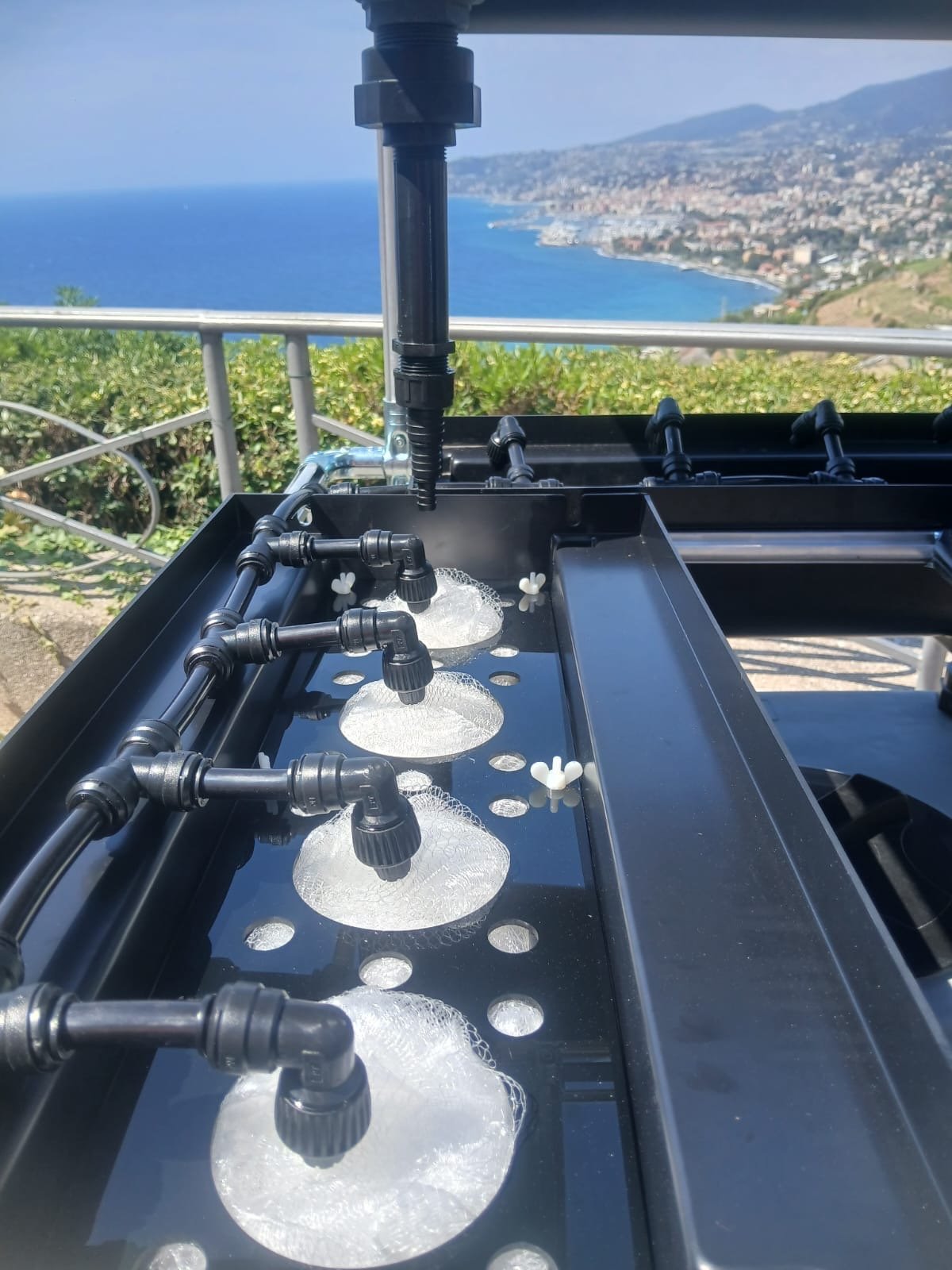
The substrate is positioned horizontally with respect to the sprinklers. Because droplets fall from a very short distance, their impact velocity is low, favoring capture by the mesh of crossed hydrophobic threads.
As droplets increase in size and mass, equilibrium is naturally lost: gravity exceeds retention and the excess solution drains back into the tank. This helps reduce the risk of overwatering while keeping water and mineral salts available to the roots.
Simplified representation of the physical equilibrium that allows droplets to remain suspended within interconnected fibers.
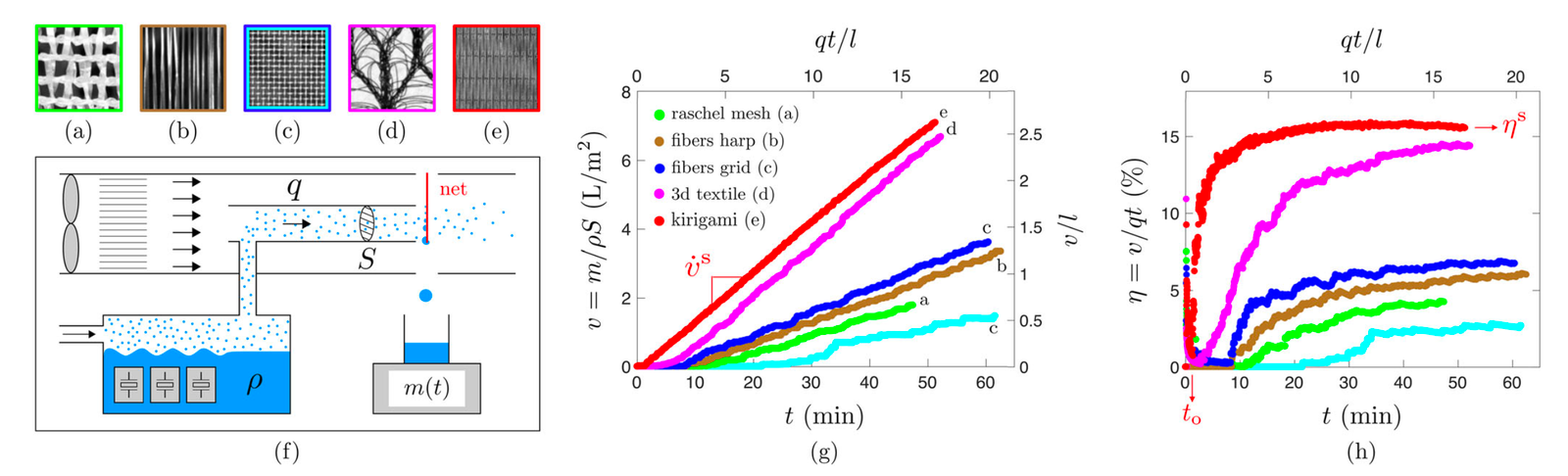
These publications do not describe Meaplant directly, but they document physical mechanisms that help explain fiber-based droplet retention: suspension, capture, water collection, impact behavior and controlled detachment.
Bent fibers can retain larger droplets than simple horizontal fibers, supporting the role of geometry in droplet suspension.
Droplets interacting with thin horizontal fibers can remain suspended or detach depending on droplet size, velocity and the balance between retention forces and gravity.
Structured networks show how geometry, fiber arrangement and surface interactions influence water capture, retention and controlled drainage.
A falling droplet can remain attached, detach or split depending on impact velocity, droplet size and fiber thickness. This makes the physics of droplet capture and release visible and immediately understandable.
FLOW-3D simulations visually demonstrate how droplets interact with interconnected fibers: they impact the structure, become captured inside the mesh, spread through the network and finally drain when mass and gravity overcome retention.
Meaplant Innovation applies these physical mechanisms inside a practical soilless cultivation system: a substrate made of hydrophobic, inert threads where droplets remain suspended, roots access water and nutrients, and excess solution returns naturally to the tank.
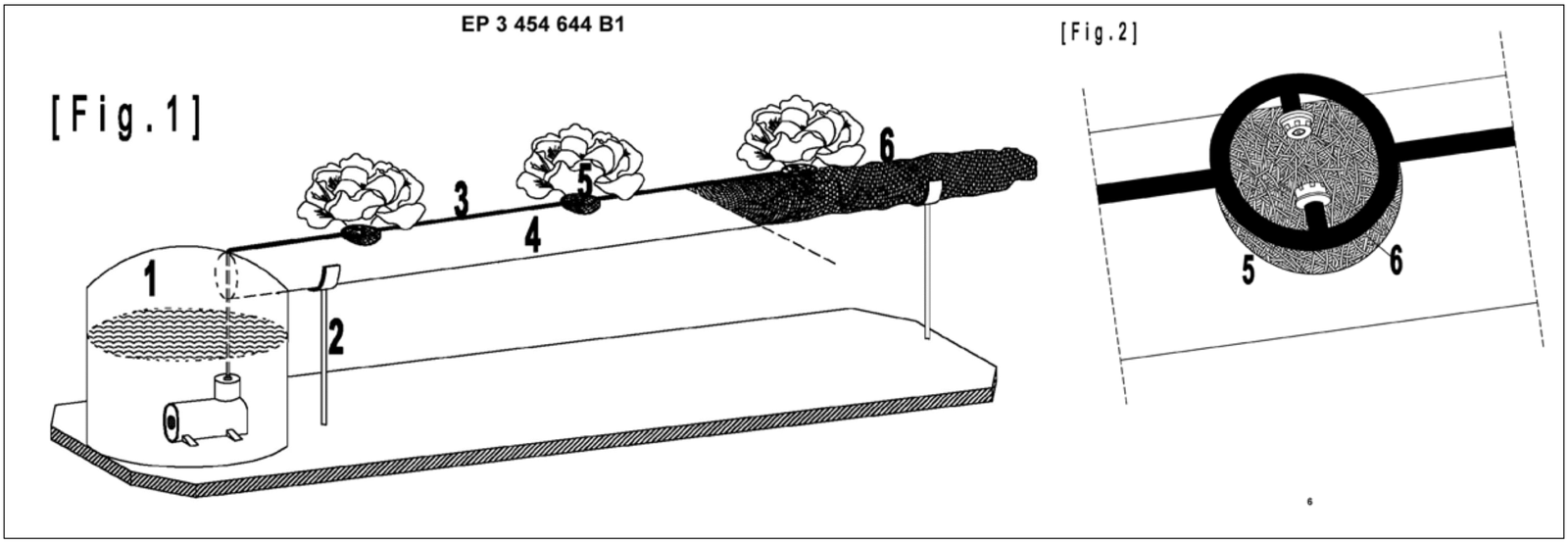
Meaplant patent drawing — representation of the substrate made of a 3D network of crossed threads.
Where natural physics
becomes cultivation technology.
For inquiries, collaborations, and orders, get in touch with Meaplant Innovation.
info@meaplant.com