About Us

Meaplant Innovation

Our story is one of continuous evolution, driven by a passion to make it easy for everyone, everywhere to grow their own plants.

Dr. Caterina Allera, in her experience as a researcher in the field of soilless cultivation at CREA (Italian Council for Agricultural Research), has explored various cultivation techniques in natural and artificial substrates, which are of great interest due to their higher productivity compared to traditional farming methods. Her research led her to conclude that the complexity of these cultivation systems primarily arises from the interaction between the growing substrate and the nutrient solution provided to the plants.

Currently used substrates retain water and mineral salts, which accumulate in the porous matrix. A high concentration of salts at the root level is harmful to plants, making it essential to conduct complex monitoring to prevent crop damage. Additionally, the porous matrix promotes fungal diseases, necessitating sterilization systems.

These challenges inspired the development of MEAPLANT Innovation, a breakthrough concept that envisions a cultivation substrate capable of retaining the nutrient solution in the form of droplets without absorbing them. This innovation simplifies soilless cultivation techniques by eliminating the complications associated with traditional substrates.

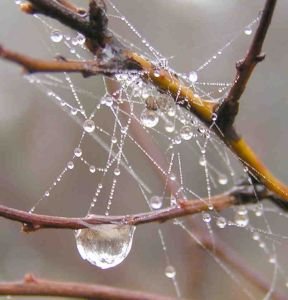
But how can a substrate retain water without absorbing it? The answer came from nature itself—the way water droplets remain suspended on a spider’s web after rainfall provided the inspiration for MEAPLANT’s revolutionary new substrate

CATERINA ALLERA

Biologist Researcher

Our story is one of continuous evolution, driven by a passion to make it easier for everyone, everywhere to grow their own plants.

Dr. Caterina Allera, in her experience as a researcher in the field of soilless cultivation at CREA (Italian Council for Agricultural Research), explored various cultivation techniques using both natural and artificial substrates, which are of great interest due to their higher productivity compared to traditional farming methods.

Her research led her to conclude that the complexity of these cultivation systems primarily arises from the interaction between the growing substrate and the nutrient solution supplied to the plants.

Currently used substrates retain water and mineral salts, which accumulate within the porous matrix. High salt concentrations at the root level are harmful to plants, making complex monitoring systems necessary to prevent crop damage.

These challenges inspired the development of Meaplant Innovation — a breakthrough concept based on a cultivation substrate capable of retaining nutrient solution droplets without absorbing them.

But how can a substrate retain water without absorbing it?

The answer came directly from nature itself: the way water droplets remain suspended on a spider’s web after rainfall became the inspiration behind Meaplant Innovation’s revolutionary new substrate.

Caterina Allera

Biologist Researcher
Scientific Foundation

The Physics Behind Meaplant Innovation

Meaplant Innovation is based on physical mechanisms observed in nature and studied in droplet dynamics, microfluidics, fiber networks and water-retention systems.

Surface tension Hydrophobic fibers Droplet retention Controlled drainage Closed-loop recirculation Root oxygenation
From nature to patented technology

Water droplets remain suspended within a three-dimensional lattice of threads, remaining accessible to plant roots without saturating the substrate.

Just as droplets can remain suspended on spider webs, natural fibers or hydrophobic surfaces, the Meaplant substrate uses a network of chemically inert threads to retain nutrient solution droplets through the balance between surface tension, fiber geometry and gravity.

How it works

A controlled balance between retention and natural drainage.

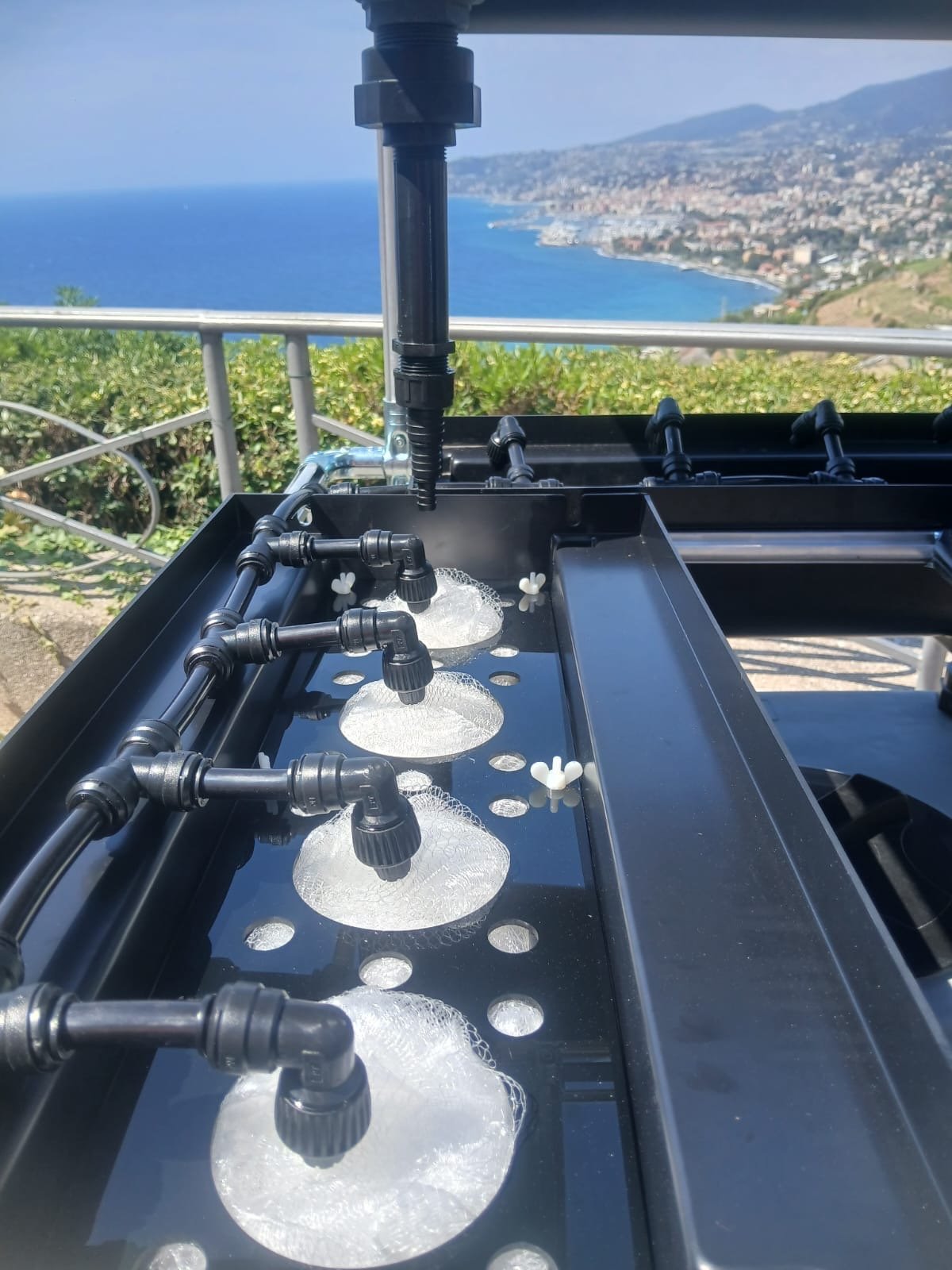
The substrate is positioned horizontally with respect to the sprinklers. Because droplets fall from a very short distance, their impact velocity is low, favoring capture by the mesh of crossed hydrophobic threads.

As droplets increase in size and mass, equilibrium is naturally lost: gravity exceeds retention and the excess solution drains back into the tank. This helps reduce the risk of overwatering while keeping water and mineral salts available to the roots.

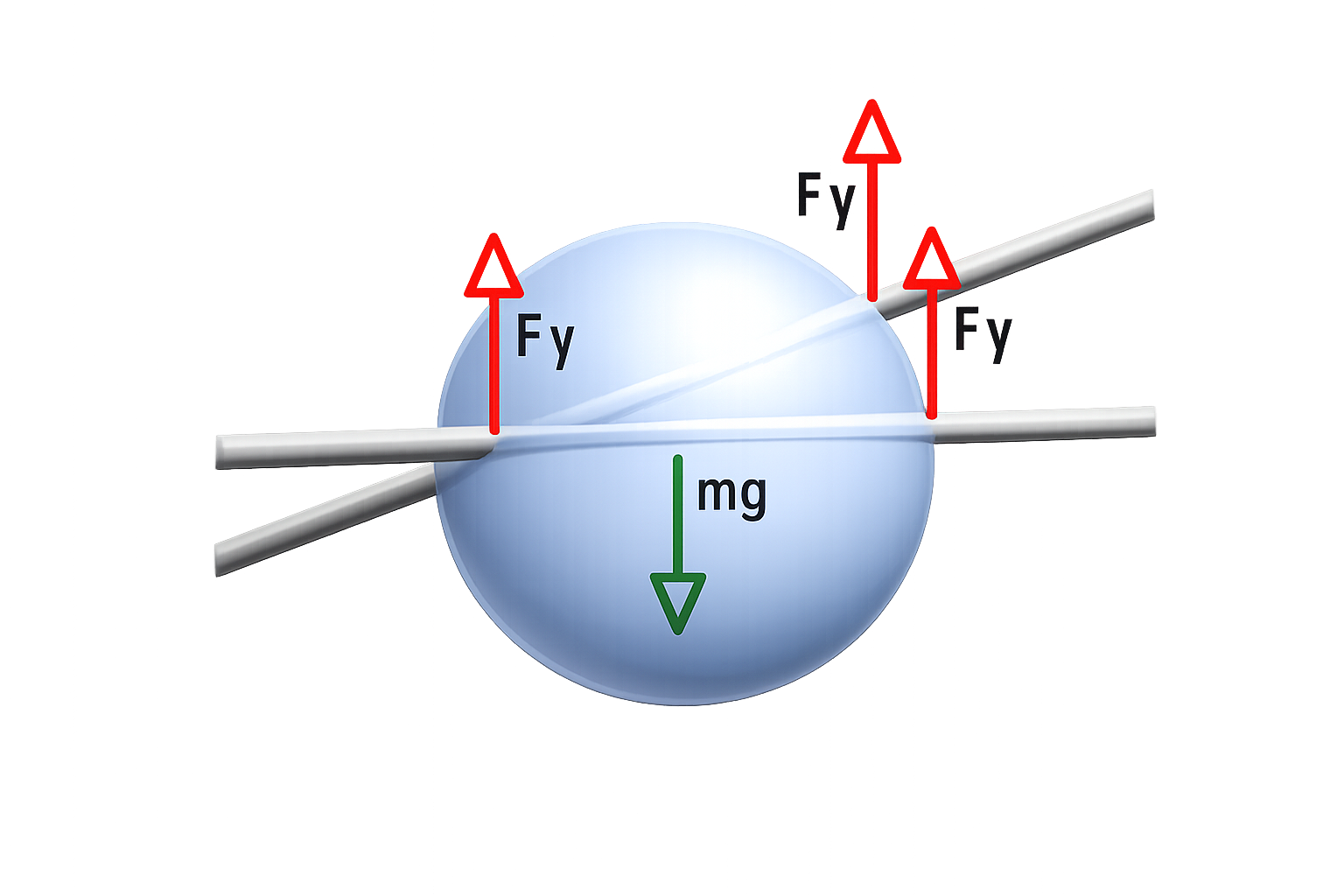
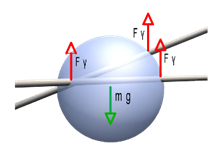
Balance between gravity and surface tension in a droplet suspended on fibers

Simplified representation of the physical equilibrium that allows droplets to remain suspended within interconnected fibers.

Scientific Literature on Droplet–Fiber Interactions

Scientific studies explaining the physical principles behind the substrate.

These publications do not describe Meaplant directly, but they document physical mechanisms that help explain fiber-based droplet retention: suspension, capture, water collection, impact behavior and controlled detachment.

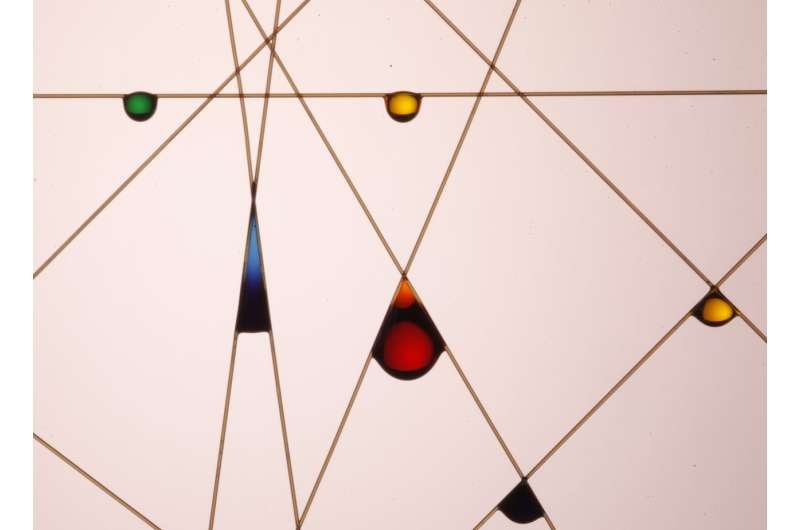
Droplets on Bent Fibers

Bent fibers can retain larger droplets than simple horizontal fibers, supporting the role of geometry in droplet suspension.

Z. Pan · F. Weyer · W.G. Pitt · N. Vandewalle · T.T. Truscott
Soft Matter · 2018 · Vol. 14 · p. 3724
DOI: 10.1039/C7SM01729D
Droplets on bent fibers scientific image
Water droplets attach to fibers at various locations, but the largest drops accumulate at intersections that form acute angles. The best angle for a large droplet: 36 degrees. Credit: Splash Lab

Capturing Drops with a Thin Fiber

Droplets interacting with thin horizontal fibers can remain suspended or detach depending on droplet size, velocity and the balance between retention forces and gravity.

Élise Lorenceau · Christophe Clanet · David Quéré
Capturing Drops with a Thin Fiber
Journal of Colloid and Interface Science · 2004 · Pages 192–197
DOI: 10.1016/j.jcis.2004.06.054
Sequence showing a droplet detaching from a thin fiber
Sequence adapted from Lorenceau, Clanet & Quéré.

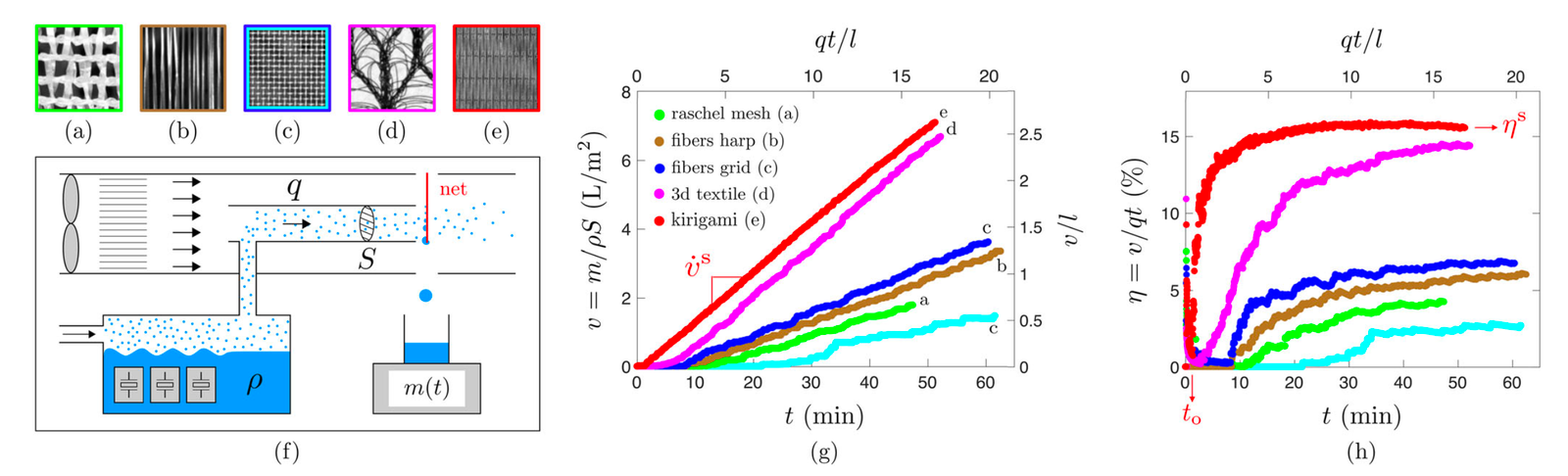
Kirigami Fog Nets

Structured networks show how geometry, fiber arrangement and surface interactions influence water capture, retention and controlled drainage.

Bintein, P.B. · Cornu, A. · Weyer, F. et al.
npj Clean Water · Volume 6 · Article 54 · 2023
DOI: 10.1038/s41545-023-00266-6
Kirigami fog nets scientific study image
Figure adapted from Bintein et al. · Nature Portfolio / npj Clean Water.

Drop Impact on a Fiber

A falling droplet can remain attached, detach or split depending on impact velocity, droplet size and fiber thickness. This makes the physics of droplet capture and release visible and immediately understandable.

Sung-Gil Kim · Wonjung Kim
Drop Impact on a Fiber
Physics of Fluids · Vol. 28 · 042001 · 2016
DOI: 10.1063/1.4945103
Credit: Wonjung Kim / Sogang University
Computational Fluid Dynamics

Visualizing droplet behavior inside a fiber network.

FLOW-3D simulations visually demonstrate how droplets interact with interconnected fibers: they impact the structure, become captured inside the mesh, spread through the network and finally drain when mass and gravity overcome retention.

Visual simulation references courtesy of FLOW-3D. Videos embedded from the official FLOW-3D YouTube channel.
Droplet Impact on a Fiber Bed | FLOW-3D
Fiber-bed droplet interaction | FLOW-3D
From science to invention

A physical principle transformed into a patented cultivation system.

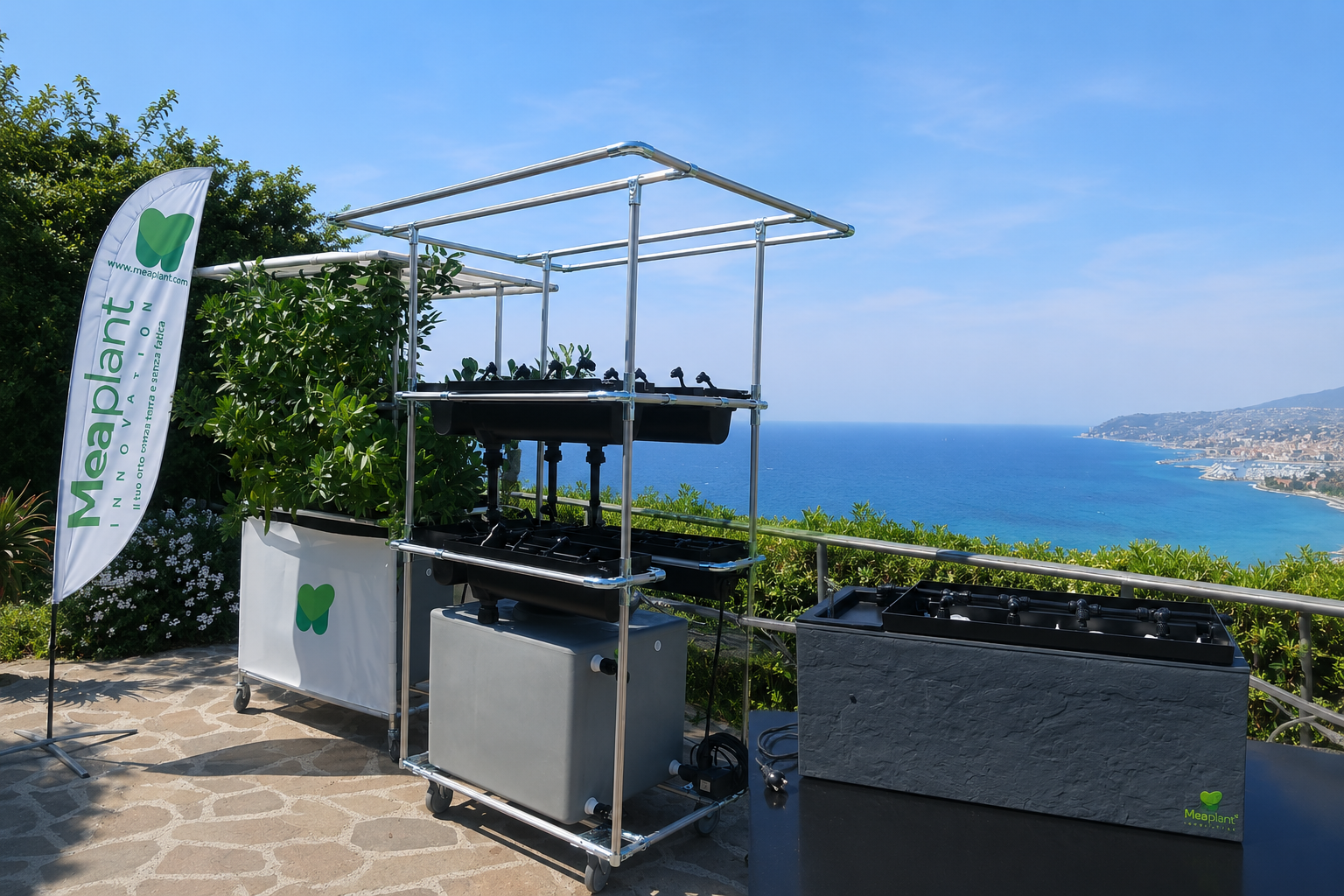
Meaplant Innovation applies these physical mechanisms inside a practical soilless cultivation system: a substrate made of hydrophobic, inert threads where droplets remain suspended, roots access water and nutrients, and excess solution returns naturally to the tank.

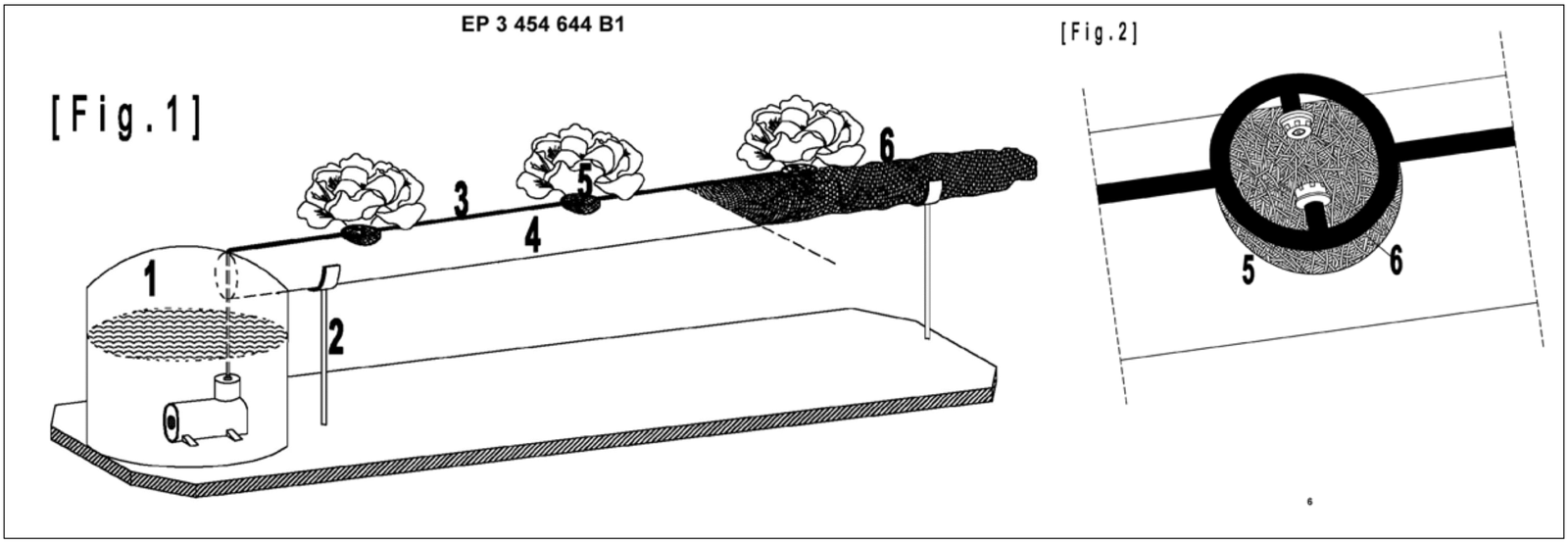
  • Three-dimensional network of crossed threads
  • Hydrophobic and chemically inert substrate
  • Droplets retained without soil saturation
  • Natural drainage by gravity
  • Closed-loop water recovery
  • Worldwide patented technology
Meaplant patent drawing showing the thread-based substrate

Meaplant patent drawing — representation of the substrate made of a 3D network of crossed threads.

Where natural physics
becomes cultivation technology.

This is
Meaplant Innovation.

Around the World

A Worldwide Innovation in Soilless Cultivation

The drops of water supplied by an irrigation system are suspended on a lattice of threads forming our innovative cultivation substrate, just as water droplets remain suspended on a spider’s web after the rain. The droplets remain fully available to plant roots without the accumulation of mineral salts inside the substrate.

User-friendly — simply add water and mineral salts.
Water savings of up to 90%.
No need for herbicides or chemical pesticides.
Can be assembled and disassembled anywhere.
Built with lightweight and recyclable materials.
Suitable for outdoor use.
Allows plants with different needs to grow together.

Meaplant Innovation is the only system designed to allow everyone, everywhere, to cultivate a real vegetable garden through an extremely simple cultivation process. Users only need to periodically add water and mineral salts into the tank and activate the irrigation timer, without complex monitoring or continuous maintenance during plant growth.

Meaplant Innovation can also represent an important solution for improving food security in arid regions, areas affected by water scarcity, and densely populated metropolitan environments vulnerable during emergency situations.

Many natural phenomena involve suspended water droplets: dew forming on spider webs, the capture of droplets on cactus spines, or the movement of droplets along plant fibres. These mechanisms have been studied for technological applications ranging from medical microfluidics to fog-harvesting systems used in desert regions.

Meaplant Innovation is the first cultivation system to apply these physical principles in order to make soilless cultivation simpler, more efficient, and accessible to everyone.

Our cultivation substrate is composed of a network of hydrophobic and chemically inert materials. Water and mineral solution droplets supplied through the irrigation system remain suspended on the mesh thanks to the balance between surface tension and gravity.

The videos below demonstrate how droplets supplied by the irrigation system are captured within a mesh of interwoven threads, just as they are inside the Meaplant Innovation substrate. As droplets increase in mass, equilibrium is lost and the solution naturally precipitates back into the tank.

Innovative Cultivation System

The complexity of Nature in simplicity of MEAPLANT  INNOVATION

Patented in the World

USA, CHINA, AUSTRALY, INDIA, EUROPE, EMIRATI ARABI…

Innovative Cultivation System

The complexity of Nature in simplicity of MEAPLANT  INNOVATION

Patented in the World

USA, CHINA, AUSTRALY, INDIA, EUROPE, EMIRATI ARABI…

Around the World

A Worldwide Innovation in Soilless Cultivation

The drops of water, supplied by an irrigation system, are suspended on a lattice of threads forming our innovative cultivation substrate, as you can look on a spider’web after the rain. The drops are completely available for the plant’ roots without accumulation of mineral salts inside the substrate.

MEAPLANT INNOVATION is the only system that allows you to cultivate a real vegetable garden for everyone, everywhere, due to its simplicity of use: it is only necessary to periodically add water and mineral salts into the tank and turn on the irrigation timer,  without  any particular checks and wait for the plant growth. MEAPLANT can also be an important solution to guarantee food safety in arid areas, with water scarcity and also in large metropolises due to their vulnerability in case of emergency.

Many phenomena in Nature involve trapped drops of water: the formation of dew drops on a spider’s web, the capture of drops of water on the spines of cacti or the movement of droplets on plant fibres. These phenomena have been studied and explored for various technological applications: from microfluidics for medical and electronic equipment, to harvest nets of the water drops from fog in the desert areas. MEAPLANT’s innovation for the first time in history has applied these physical principles to make soilless cultivation simple, efficient and suitable for everyone.

Our growing substrate is made up of a network of hydrophobic and chemically inert substances. The drops of water and mineral salts, fed by an irrigation system, remain suspended on the wires thanks to the balance established between the surface tension of the drops and their weight.

the videos below show how the drops supplied by an irrigation system are captured by a mesh of interwoven threads as happens in our growing substrate. When the drops increase in mass and become greater, they lost their equilibrium and precipitate inside the tank.

Simulation Acknowledgements

Simulation result courtesy of Flow Science, Inc., developer of the computational fluid dynamics (CFD) software FLOW-3D®.
Flow Science is based in Santa Fe, New Mexico, USA.

FLOW-3D®

Simulation Acknowledgements

Simulation result courtesy of Flow Science, Inc., developer of the computational fluid dynamics (CFD) software

Flow Science is based in Santa Fe, New Mexico USA – Inc. 683 Harkle Road.

Meaplant Innovation

Comparison with Current Systems

A scientific and practical comparison between Meaplant Innovation and current soilless cultivation systems.

Meaplant Innovation is a universal closed-circuit cultivation system in which it is possible to grow all the plants usually cultivated in current soilless cultivation systems, as well as additional plants that are not commonly grown in soilless cultivation, including vines, citrus fruits, apples, and currants, already tested within our system.
Meaplant Innovation allows cultivation also in open-air environments because the plants are rooted similarly to natural soil conditions, and there is no risk of root asphyxiation in the event of heavy rain. The system can be used on balconies, terraces, roofs, green walls, urban outdoor spaces, and in the countryside.
In current soilless cultivation systems, roots are weakly anchored or not anchored at all because they grow inside perlite, pumice, zeolite, rock wool, coconut coir, or other inconsistent materials, in water (Hydroponics), or in air (Aeroponics). In these systems, plants cannot withstand environmental conditions and are generally used only in protected environments such as greenhouses or buildings equipped with artificial lighting systems (vertical farming), resulting in high cultivation costs.
Meaplant Innovation eliminates the risk of root asphyxia. The substrate never becomes saturated with water because excess water drains away while maintaining oxygen-rich empty spaces. The absence of micropores, commonly present in current substrates, also prevents the formation of fungi and bacteria. Furthermore, the substrate is bacteriostatic and does not require special disinfection treatments.
In hydroponics, roots remain submerged in water, which does not respect the natural physiology of plants, making them weaker and more vulnerable to fungi and bacteria. Complex disinfection and oxygenation systems for the recirculating nutrient solution are required. Only short-cycle plants such as salads, spinach, basil, parsley, and strawberries can generally be cultivated. In aeroponics, roots remain suspended in air, which also does not respect plant physiology, making the system highly vulnerable because a single irrigation failure may compromise the entire crop.
The Meaplant Innovation cultivation medium does not absorb salinity. The nutrient solution supplied by the irrigation system remains chemically consistent at the roots because the substrate does not alter the solution through salt absorption. Continuous monitoring of supplied and drained solutions is therefore unnecessary, and exhausted nutrient solutions requiring disposal are not generated.
In closed-loop systems using conventional substrates that absorb salinity, substrates must frequently be washed to prolong the recirculating nutrient solution. If not washed, the nutrient solution often needs replacement every few days, generating waste and environmental impact. Frequent washing also subjects plants to salinity stress, while constant monitoring of mineral concentrations becomes necessary.
Irrigation management in Meaplant Innovation is simple and does not require measuring drainage quantities. Water droplets remain suspended on the substrate mesh and naturally fall back into the tank through gravity when they reach sufficient mass, completely eliminating the risk of over-irrigation.
Meaplant Innovation allows the simultaneous cultivation of plants with different water requirements. For example, watermelons can be cultivated together with succulents within the same irrigation cycle.
In current substrate, hydroponic, and aeroponic cultivation systems, it is generally possible to grow only one plant species at a time because each species requires a dedicated nutrient solution and irrigation cycle.
In the Meaplant Innovation cultivation substrate, all water droplets remain directly available to the roots. The water potential is equal to zero, meaning the roots do not need to exert absorption force as they do in conventional substrates.
Meaplant Innovation minimizes water loss through evaporation using the same strategy observed in cactus physiology. Water absorption by the roots occurs more rapidly than evaporation due to the hydrophobic-hydrophilic gradient established between the substrate and the roots.
The Meaplant Innovation cultivation substrate is made from recyclable materials or biomaterials suitable for food use.
Conventional cultivation substrates such as perlite, pumice, zeolite, rock wool, and coconut coir are generally not recyclable and often require special handling and disposal procedures.
Meaplant Innovation

Join the Future of Cultivation.
Grow Smarter with Meaplant Innovation.

For inquiries, collaborations, and orders, get in touch with Meaplant Innovation.

info@meaplant.com